Most people have never seen their project before it gets built. Renderings change that. Here is what they are, how they work, and why they matter more than most people realize.
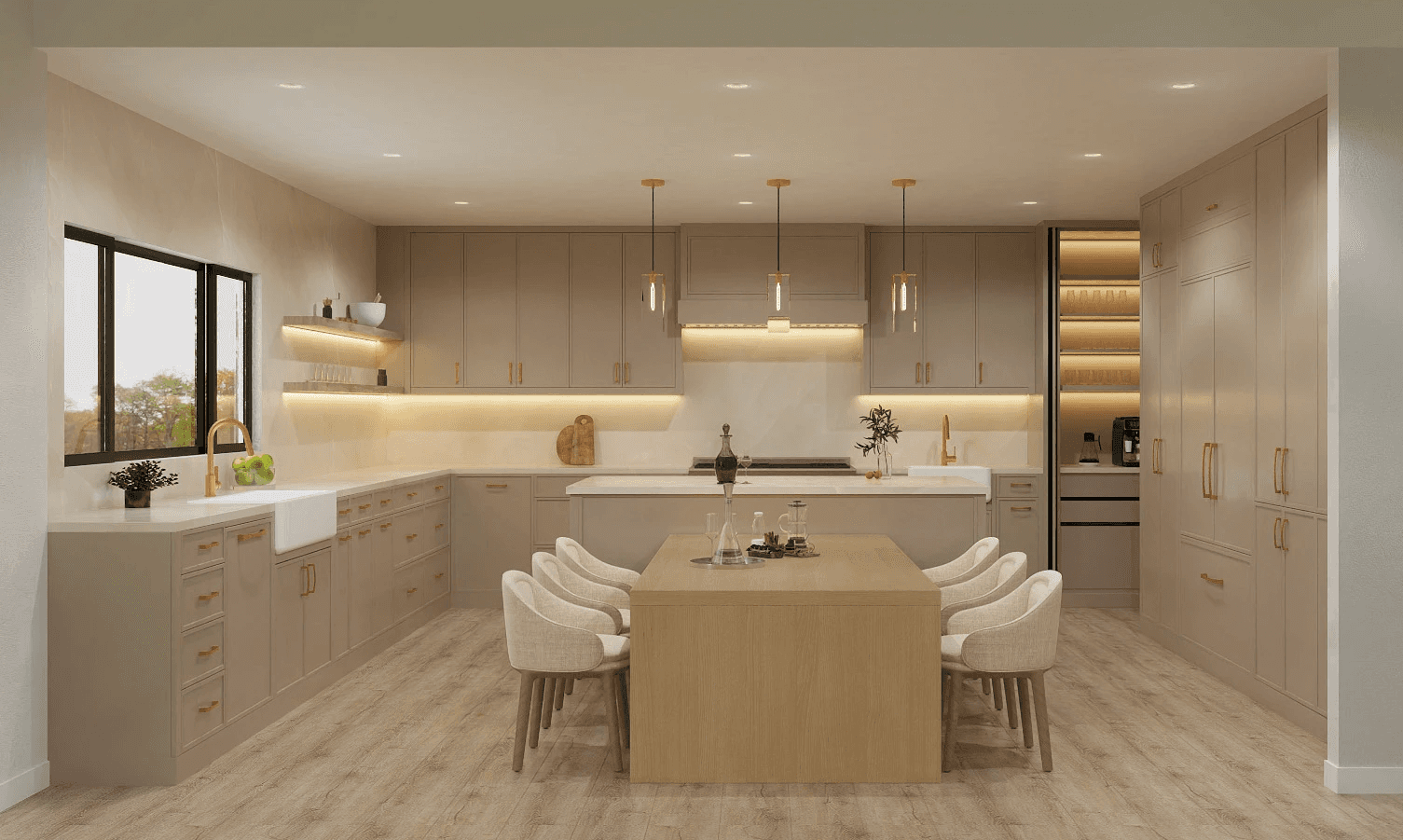
I first got into renderings when my mom told me she did not understand our architect's plans.
Architects and designers look at a set of drawings and see the finished space. The proportions, the materials, the way light moves through the room. That translation happens automatically after years of training. For most clients, it does not happen at all.
My mom was looking at the same drawings I was. She just could not see what I saw. So I got my computer and got started on a few renderings. When I showed them to her, she said, "Wow, this is beautiful. This is exactly how I pictured it."
That was the beginning of Realized Design. And it is the reason I believe every project should be rendered.
Most people have never seen their project before it gets built. This post is about changing that.
So what is an architectural rendering?
It is a photorealistic image of a space or building that does not exist yet. Not a sketch. Not a floor plan. A picture. One that shows the materials, the lighting, the proportions, and the feeling of a space before a single dollar gets spent on construction.
Most people are not trained to read blueprints. Architects and contractors spend years learning how to interpret those lines and symbols. Everyone else is asked to imagine something from a language they do not speak. Renderings remove that gap entirely.
"Seeing your project rendered is the difference between hoping it turns out right and knowing it will."
How does the process work?
It starts with information. Floor plans, elevations, material selections, and site photos. A 3D model gets built from that data, reconstructing the geometry of the space digitally. Then the materials go on. Lighting gets set. A camera angle gets chosen. And the final image renders out.
The best renderings are not just beautiful. They are accurate. The dimensions are right. The materials are real. What you are looking at is genuinely what you are going to get.
In plain terms, the process looks like this:
Plan
Every rendering starts with a conversation. What is the space? What decisions still need to be made? What does this image need to communicate and to whom? A backyard rendering for a homeowner looks different from an exterior rendering going to a planning department. Getting clear on the purpose upfront saves time on every step that follows.
Model
The space gets built in 3D from your drawings, measurements, or site photos. This is where accuracy matters most. Every dimension, wall, window, and structural element gets reconstructed digitally so the final image reflects the actual design — not an approximation of it.
Develop
Materials go on, lighting gets set, and the camera angle gets chosen. This is the iterative stage where the rendering comes to life through rounds of feedback. The tile, the wood grain, the way afternoon light hits the countertop. Details get refined until the image looks exactly right.
Deliver
Final images ready for whatever comes next. A client presentation, a permit submittal, a contractor walkthrough, or simply the moment you look at the screen and say yes, that is what I want to build.
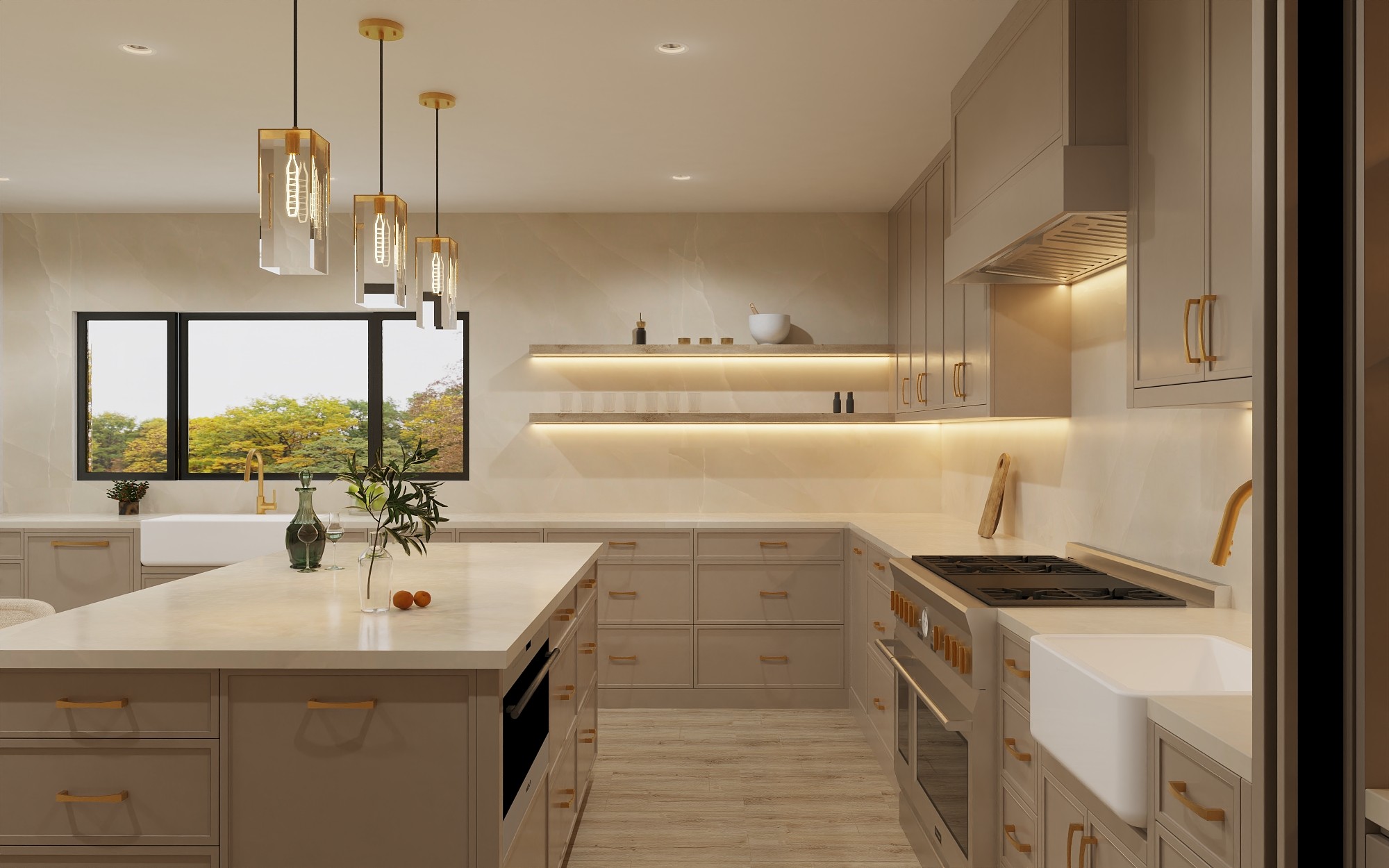
Does this only work for big projects?
This is the question that comes up most. People assume renderings are for large commercial developments or custom builds with big budgets. That is not how it works.
Renderings are just as useful for a kitchen remodel, a backyard renovation, or a room addition. The size of the project does not determine whether visualization helps. The question is whether you want to see it before you build it.
Why this actually matters
Beyond the clarity in the moment, renderings do something practical. They make decisions earlier in the process, when changes are inexpensive, instead of later when they are not.
According to McKinsey, projects that use visualization tools resolve design conflicts 30% faster than those that rely on drawings alone.
[EXTERNAL LINK: "resolve design conflicts 30% faster" → https://michiganmobility.org/how-3d-visualization-drives-sustainable-design/ → opens new tab]
Changing a cabinet finish in a rendering takes minutes. Changing it after installation is a conversation nobody wants to have.
"Decisions made early are cheap. Decisions made during construction are not."
Renderings also align everyone on the same page. The homeowner, the designer, the contractor. When everyone is looking at the same image, there is less room for misinterpretation and fewer surprises once the work begins.
For anyone going through a permit process in Southern California, a photorealistic exterior rendering often does more to move a project through planning and design review than a set of drawings ever could.

Featured Posts





Explore Related Topics
